King and pawn endgames
Few pieces, exact answers. These guides cover the rules of thumb that decide whether a pawn gets through, and where they stop working.
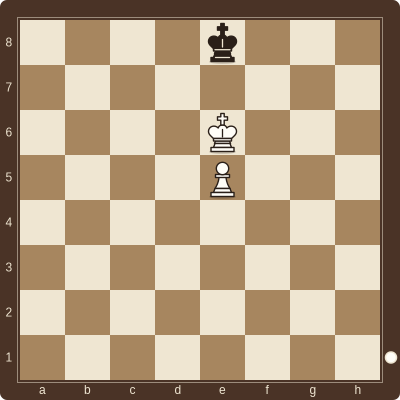
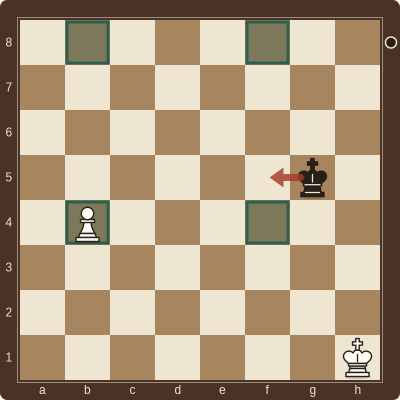
The square rule: can the king catch that pawn?
Draw the square of a passed pawn and know at a glance whether the king catches it, with the turn, the starting rank and obstacles covered.
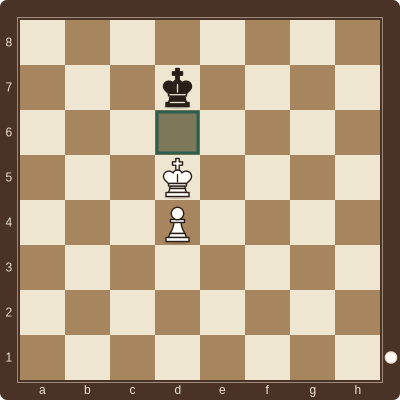
The opposition: why it can be better not to move
Direct, distant and diagonal opposition in chess endgames: how to take it, use it to get your king through, and when it makes no difference.
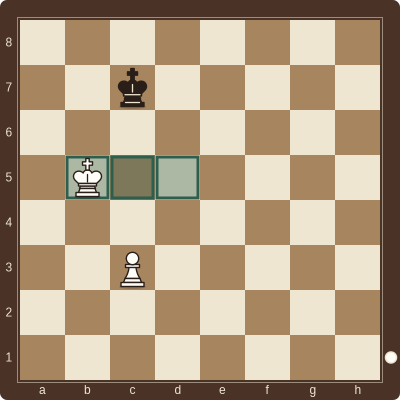
Key squares: where your king needs to arrive
Learn the key squares for pawns on ranks 2 to 6, the one knight pawn trap and how the defending king keeps you out, all with clear diagrams.
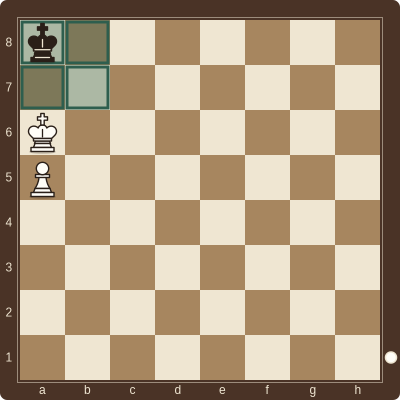
Rook pawn endings: how the edge saves the defender
Why a pawn on the a or h file so often draws: the corner defense, the king trapped in front of its own pawn and the race to the corner.
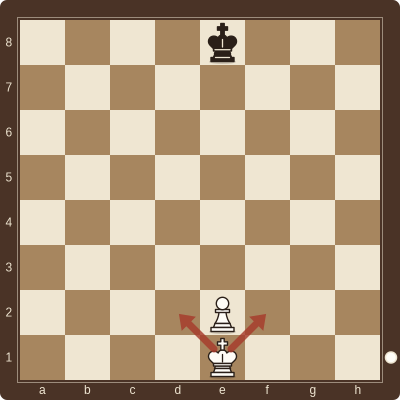
How to escort a passed pawn with your king in front
King and pawn against a lone king: see why pushing first often draws, where your king must go and how the seventh rank check test works.
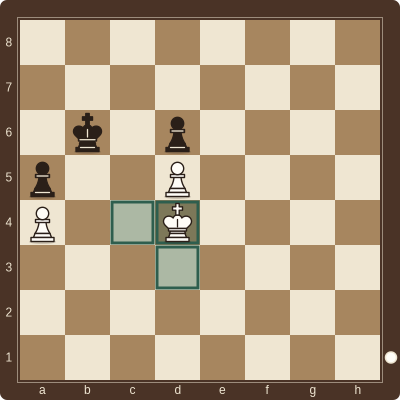
How triangulation hands the move back to your opponent
Triangulation in chess endgames explained with one full example: walk a king triangle, return to the same position and make the other side move.
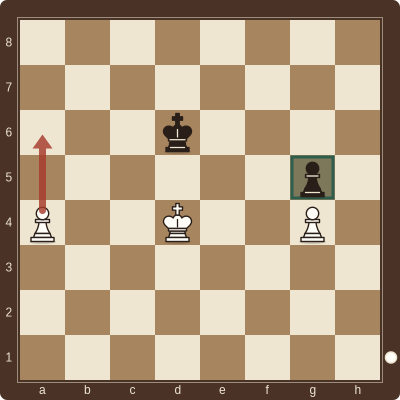
Using an outside passed pawn to drag the king away
How an outside passed pawn lures the enemy king to the far side so your king can collect the pawns left behind, and when the plan only draws.
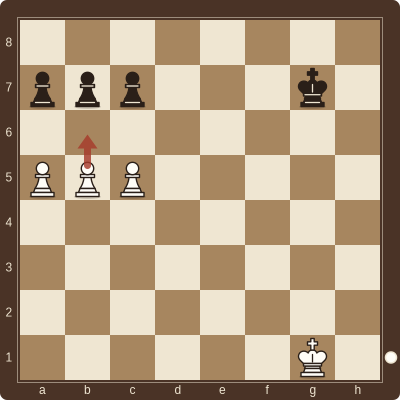
Breaking through with three pawns against three
The three against three pawn breakthrough move by move: each black reply, what happens if the defender moves first and where the kings must be.
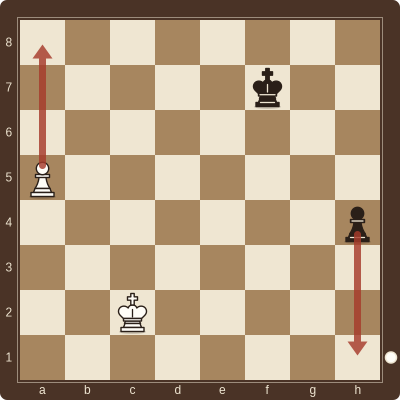
Counting a pawn race: who queens and what comes next
Count a pawn race correctly: moves to promotion, who starts, queening with check, a new queen that guards the other pawn and the skewer after.