Characteristics of Hunting Dog Breeds and Their Suitability for the Nigerian Rural Environment
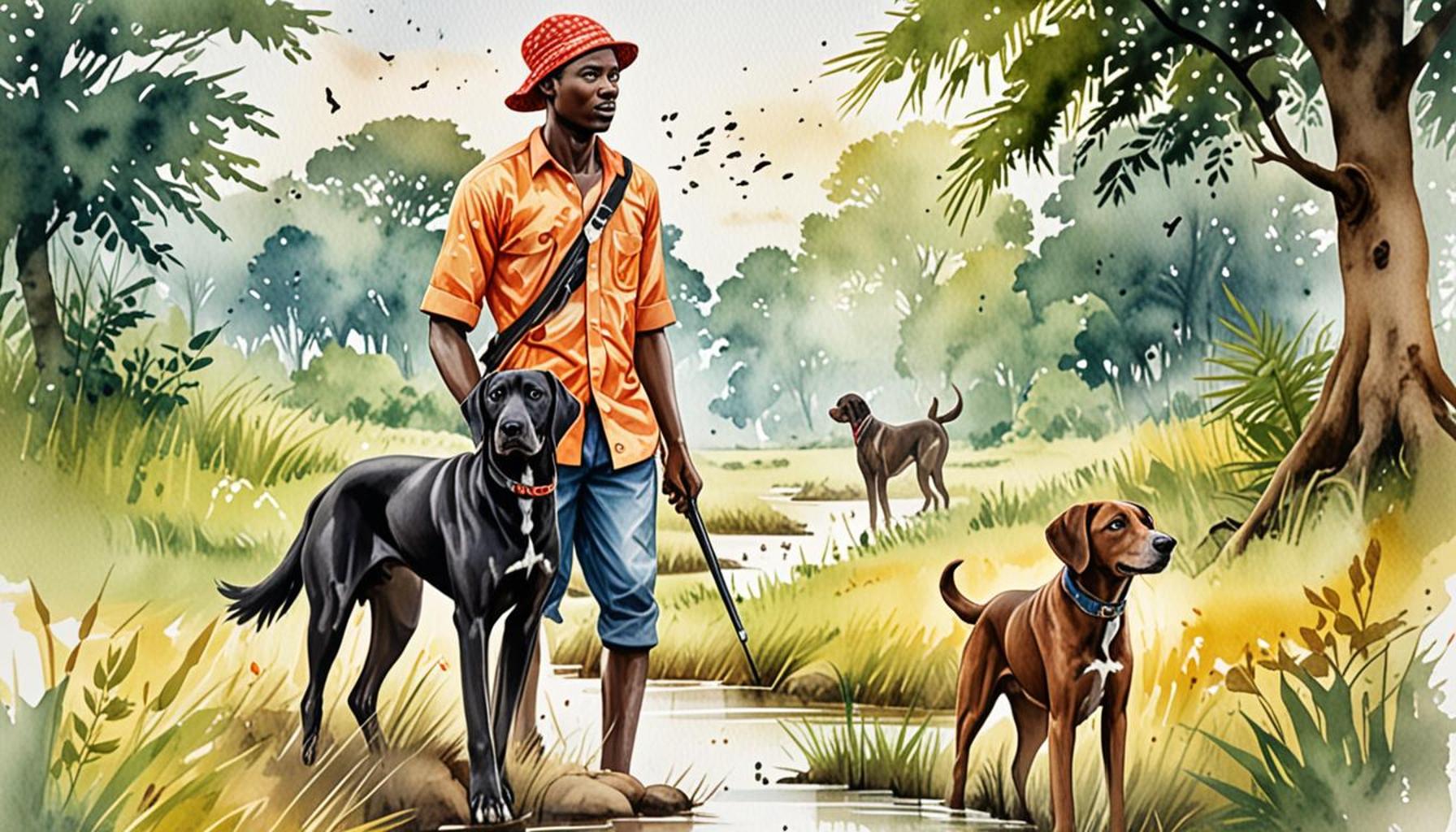
The Role of Hunting Dogs in Nigerian Culture
Nigeria’s extensive wilderness, with its diverse ecosystems ranging from savannahs to dense forests, offers a rich habitat for wildlife. In these regions, hunting transcends mere recreation, forming an integral part of local traditions and livelihoods. Hunting dog breeds, finely tuned through generations, serve as invaluable assistants to hunters in tracking and retrieving various game, from birds to larger mammals. Understanding their key characteristics is essential for ensuring a successful and sustainable hunting experience in rural Nigeria.
Each hunting dog breed carries distinct traits that suit different hunting requirements, influenced by factors like the type of game pursued and the dynamics of the terrain. For instance, while some breeds exhibit a gentle temperament suitable for handling birds, others display tenacity and aggression, making them adept at pursuing larger and more challenging prey.
- Temperament: The German Shorthaired Pointer, known for its friendly nature, is often favored for family hunting outings, while a breed like the Vizsla is celebrated for both its affectionate disposition and its relentless energy, often necessary for tracking elusive game.
- Size: Larger breeds like the Rhodesian Ridgeback are preferred when hunting big game like antelopes, thanks to their strength and endurance. In contrast, breeds like the Cocker Spaniel are small yet agile, making them excellent at flushing birds out of cover.
- Intelligence: Highly trainable breeds such as the Labrador Retriever have gained popularity among hunters due to their eagerness to please and ability to learn commands quickly, thus enhancing their effectiveness in retrieving game.
In addition, adaptability to various hunting conditions is a decisive factor in breed selection. Hunting dogs must not only withstand the heat and humidity prevalent in many Nigerian regions but also possess the stamina for extensive hunting trips. For instance, the Bloodhound is renowned for its exceptional sense of smell, making it invaluable in tracking down scents through challenging terrains. Meanwhile, the Beagle showcases versatility and a remarkable ability to navigate through dense bush areas, proving its worth as a hunting companion.
Moreover, breeds like the Weimaraner, known for their agility and endurance, have carved a niche for themselves among hunters who require a dog that can cover long distances in pursuit of game. These traits contribute to making hunting dogs effective tools in the field, while also establishing them as loyal companions that integrate seamlessly into the hunter’s lifestyle.
As we delve deeper into understanding how hunting dog breeds excel in rural Nigeria, we must also recognize their contribution to sustainable hunting practices. Proper training, responsible management, and understanding local wildlife are crucial for maintaining ecological balance while preserving cultural traditions associated with hunting. This exploration is not just about hunting but also about cherishing the relationships formed between humans and their canine partners, thereby ensuring that both thrive in the rich tapestry of Nigeria’s natural heritage.
RECOMMENDED: Check out this similar article
Key Characteristics of Hunting Dog Breeds
When exploring hunting dog breeds suitable for the Nigerian rural environment, it is essential to delve into their intrinsic characteristics. Each breed showcases attributes that enable them to excel in various hunting situations, thereby enhancing the hunting experience for local communities.
One fundamental characteristic is the dog’s physical capability. Breeds vary widely in their size and strength, directly impacting their hunting prowess. Larger breeds like the Rhodesian Ridgeback, renowned for their muscular build and stamina, are particularly effective for hunting large game such as antelopes and wild boars. Their sheer strength allows them to chase and corner game efficiently. In contrast, smaller breeds like the Cocker Spaniel excel at hunting birds and small game, demonstrating that agility and speed can often take precedence over size when maneuvering through dense underbrush and flushing game out of hiding.
The temperament of a hunting dog plays an equally significant role in its effectiveness. Dogs bred for hunting often possess a balanced combination of enthusiasm, loyalty, and intelligence. The English Springer Spaniel, for example, is cherished not only for its keen hunting instincts but also for its friendly demeanor, making it an excellent companion during family outings in the woods. Conversely, breeds such as the Vizsla are characterized by high energy levels, which can prove advantageous when hunting in expansive rural terrains, where relentless pursuit is necessary to track down game. Such traits ensure that the drone of communal excitement resonates within the hunting community.
Furthermore, trainability stands as a pivotal feature of a successful hunting dog. The ability to learn commands quickly and respond to commands under varying conditions is paramount. Breeds like the Labrador Retriever are celebrated for their remarkable eagerness to please and high intelligence, making them easy to train. This quality is particularly beneficial in rural areas of Nigeria, where hunters require their dogs not only to track and retrieve but also to obey commands in challenging environments. Enhanced obedience not only boosts hunting success but fosters a bond between handler and dog that enriches the hunting experience.
Another important aspect is the adaptability of hunting dogs. Nigerian rural environments can be harsh, with fluctuating climate conditions ranging from extreme heat to heavy rain. Breeds that can withstand such conditions, like the Bloodhound, are invaluable. Known for their exceptional tracking abilities, these dogs excel in varied terrains and can adapt to local climatic challenges. Meanwhile, the Beagle demonstrates versatility, often seen traversing dense bush and thickets, relieving hunters by instinctively locating game.
In sum, the characteristics of hunting dog breeds—spanning from physical strength to temperament and adaptability—are critical in determining their suitability for the Nigerian rural environment. Understanding these qualities not only enhances hunters’ effectiveness but also ensures the continued coexistence and collaboration between humans and their canine companions. As hunting practices evolve within Nigeria’s changing ecosystems, recognizing these traits will be key to fostering sustainable hunting traditions that honor local heritage.
| Hunting Dog Breeds | Suitability for the Nigerian Rural Environment |
|---|---|
| Pointer | Highly effective in open fields; excellent scenting ability. |
| Beagle | Adaptable to varying terrains; friendly nature makes them great companions. |
| Brittany Spaniel | Versatile in hunting; energetic spirit matches rural lifestyle. |
| Bloodhound | Outstanding tracking skills; effective in hunting larger game. |
| Vizsla | Natural hunting instinct; thrives in spacious environments common in Nigeria. |
The above table highlights several hunting dog breeds and their unique characteristics that make them suitable for the Nigerian rural environment. Pointers, for instance, excel in open fields and showcase an impressive ability to scent out game, essential for successful hunting in expansive rural areas. The Beagle, with its adaptable nature, can easily navigate various terrains while maintaining a friendly disposition, making it a great companion for families in rural settings. On the other hand, the Brittany Spaniel is known for its versatility and energetic spirit, aligning well with the active lifestyle found in rural Nigeria. The Bloodhound stands out for its tracking abilities, making it particularly useful in capturing larger game. Lastly, the Vizsla exemplifies the ideal qualities for hunting in Nigeria, as it possesses a natural instinct for hunting and thrives in spacious environments, essential for effective hunting practices.By understanding these characteristics, individuals can make informed decisions on which breeds are best suited for their rural hunting needs, enhancing both their hunting experience and the bond with their dogs.
SEE ALSO: Click here to read another article
Specialized Skills of Hunting Dog Breeds
In addition to essential characteristics like physical capability and temperament, it’s equally vital to consider the specialized skills that certain hunting dog breeds bring to the table in the Nigerian rural environment. These breeds often have unique capabilities that can enhance the effectiveness and efficiency of hunting expeditions.
One of the most prominent skills seen in dedicated hunting dogs is their scent tracking ability. Breeds such as the Bloodhound and the Beagle possess an extraordinary sense of smell which allows them to track scents over great distances. In the Nigerian bush where tracking can involve complex terrains, these breeds can follow trails that would easily be lost to lesser dogs. This skill is especially beneficial for hunters pursuing elusive game, such as bushmeat, which often require extensive tracking efforts to locate.
Moreover, hunting dogs like the German Shorthaired Pointer exhibit a combination of pointer and retrieval skills, making them incredibly versatile in the field. Their ability to point and alert hunters to the presence of birds or game is a crucial part of the hunt. Their retrieval skills ensure that once a hunter has successfully shot game, the dog can efficiently retrieve it, providing significant support in a hunting setting where every minute counts.
Another vital skill is the water retrieval ability prominent in breeds such as the Labrador Retriever. Hunting often occurs around the numerous rivers and wetlands in Nigeria, making it essential for hunting dogs to be comfortable in water. Labs are not just exceptional swimmers; their instinctive crawling through water ensures hunters can recover waterfowl effectively, enhancing the overall hunting success rate.
Compatibility with Local Wildlife
The suitability of hunting dogs for the Nigerian rural environment also hinges on their compatibility with local wildlife. Dogs should be trained to hunt specific species common to the region while minimizing disturbances to the ecosystem. For instance, the Pointer is adept at hunting birds like the Francolin and is an excellent companion for hunters seeking to mesh seamlessly with local avian populations. Their natural instincts help them interact harmoniously with the wildlife, providing a sustainable hunting approach that respects the environment.
Furthermore, hunting dogs must have strong socialization skills when interacting with both wildlife and humans. In rural Nigerian communities where domestic animals and wildlife frequently share spaces, a balance is essential. Breeds like the Coonhound exhibit a gentle demeanor, allowing them to navigate interactions without causing undue panic among livestock or local fauna. This characteristic not only promotes harmony but also broadens the hunting community’s acceptance of utilizing dog breeds in various environments even beyond hunting.
The Role of Local Knowledge and Training
An integral part of ensuring the success of hunting dog breeds in Nigeria is the local knowledge and training methods passed down through generations. Traditional hunters often apply unique training techniques that cater to the specific characteristics of local breeds and their environment. This knowledge not only fine-tunes the dogs’ innate abilities but also ensures that their training respects and utilizes the ecological dynamics of the Nigerian rural landscape.
The collaboration between local hunters and their dogs fosters a relationship built on mutual respect and understanding. By employing region-specific training for various breeds, hunters can harness the distinct traits of their dogs, optimizing their skills for localized hunting practices.
Ultimately, the specialized skills of hunting dog breeds, their compatibility with local wildlife, and the influence of regional training methods collectively contribute to their effectiveness in the Nigerian rural environment. Embracing these dynamics holds the potential to enrich not only the hunting experience but also the cultural fabric that surrounds these age-old practices.
ADDITIONAL INSIGHTS: Expand your understanding here
Conclusion
In conclusion, the characteristics of hunting dog breeds play a pivotal role in their suitability for the Nigerian rural environment. The combination of specialized skills, compatibility with local wildlife, and knowledge derived from traditional training methods forms a holistic approach to enhancing hunting practices in this diverse region. Breeds such as the Bloodhound and Labrador Retriever not only exemplify specific abilities that optimize tracking and retrieving but also highlight the significance of adaptable temperaments that cater to the intricate dynamics between humans and wildlife.
The effectiveness of these hunting dogs is further amplified by their training, which is deeply rooted in local customs, enabling them to excel in the unique landscapes of Nigeria. Traditional hunters who integrate their expertise with canine companions create a rapport that underscores mutual respect and understanding, fostering a sustainable hunting environment. The rich tapestry of Nigeria’s rural communities, where animals and humans coexist, demands that hunting dogs navigate interactions sensitively, promoting harmony within ecosystems.
The intersection of these factors provides an opportunity for further exploration and engagement with hunting dog breeds. As rural communities continue to evolve, advocating for responsible breeding, training practices, and wildlife conservation efforts can bolster the effectiveness of hunting expeditions while preserving Nigeria’s natural resources. By appreciating the art and science behind hunting dogs, stakeholders can ensure that these remarkable breeds remain integral to the rural heritage and livelihoods of Nigerian hunters.
Related posts:
Characteristics of Pet Breeds that Promote Family Interaction in Nigeria
Comparison of Exotic Pet Breeds and Their Specific Needs in the Nigerian Market
Cat Breeds and Their Dietary Particularities in the Nigerian Context
Impact of Genetic Characteristics on Dog Breeds for Nigerian Families
Temperament Characteristics of Popular Dog Breeds in Nigeria
Particularities of Rodent Breeds as Pets and Their Educational Contribution to Nigerian Children

Linda Carter is a writer and pet care expert specializing in pet health, grooming, and wellness. With extensive experience helping pet owners create safe, loving, and enriching environments for their animals, Linda shares her knowledge on our platform. Her goal is to empower readers with practical advice and strategies to ensure their pets thrive and lead joyful, healthy lives.